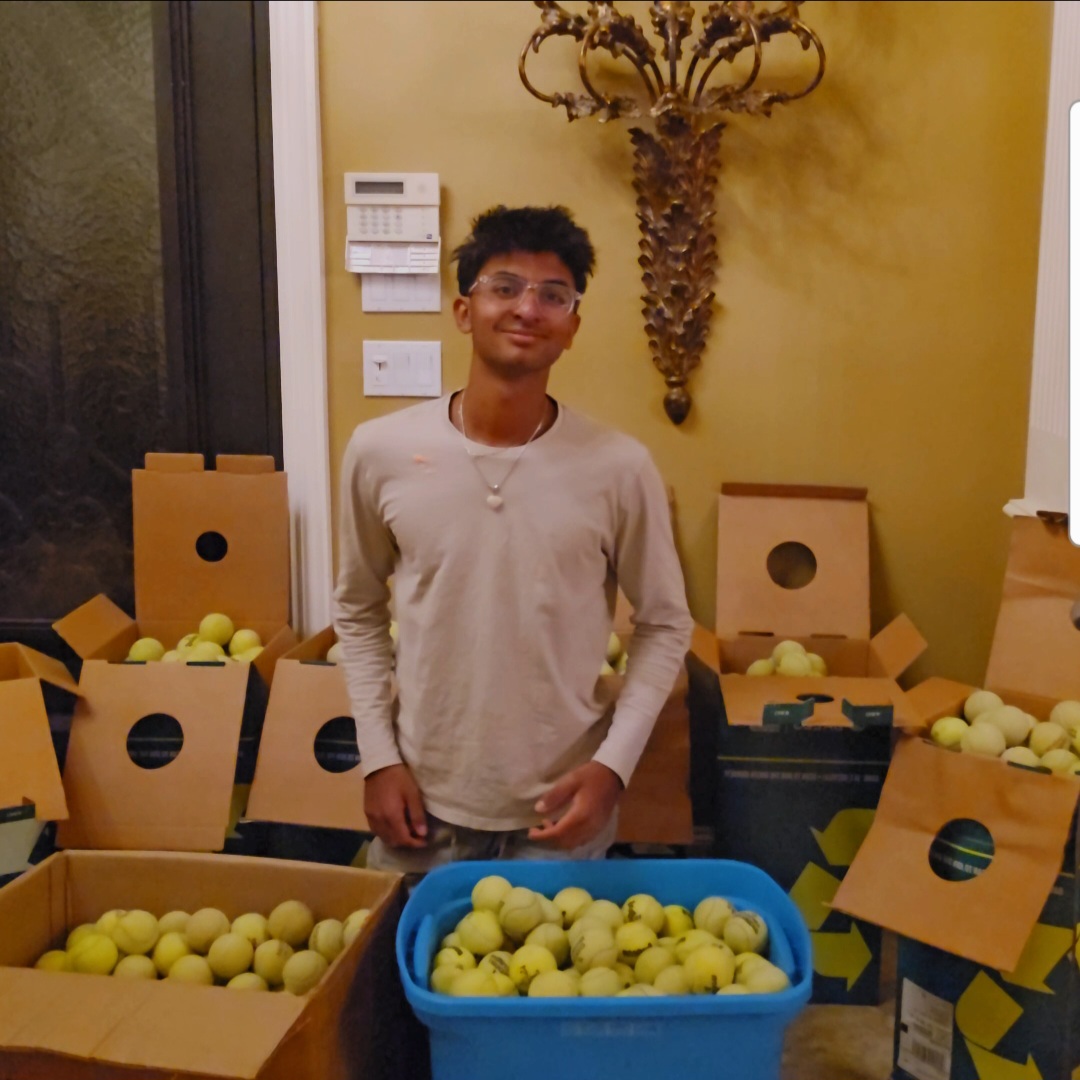
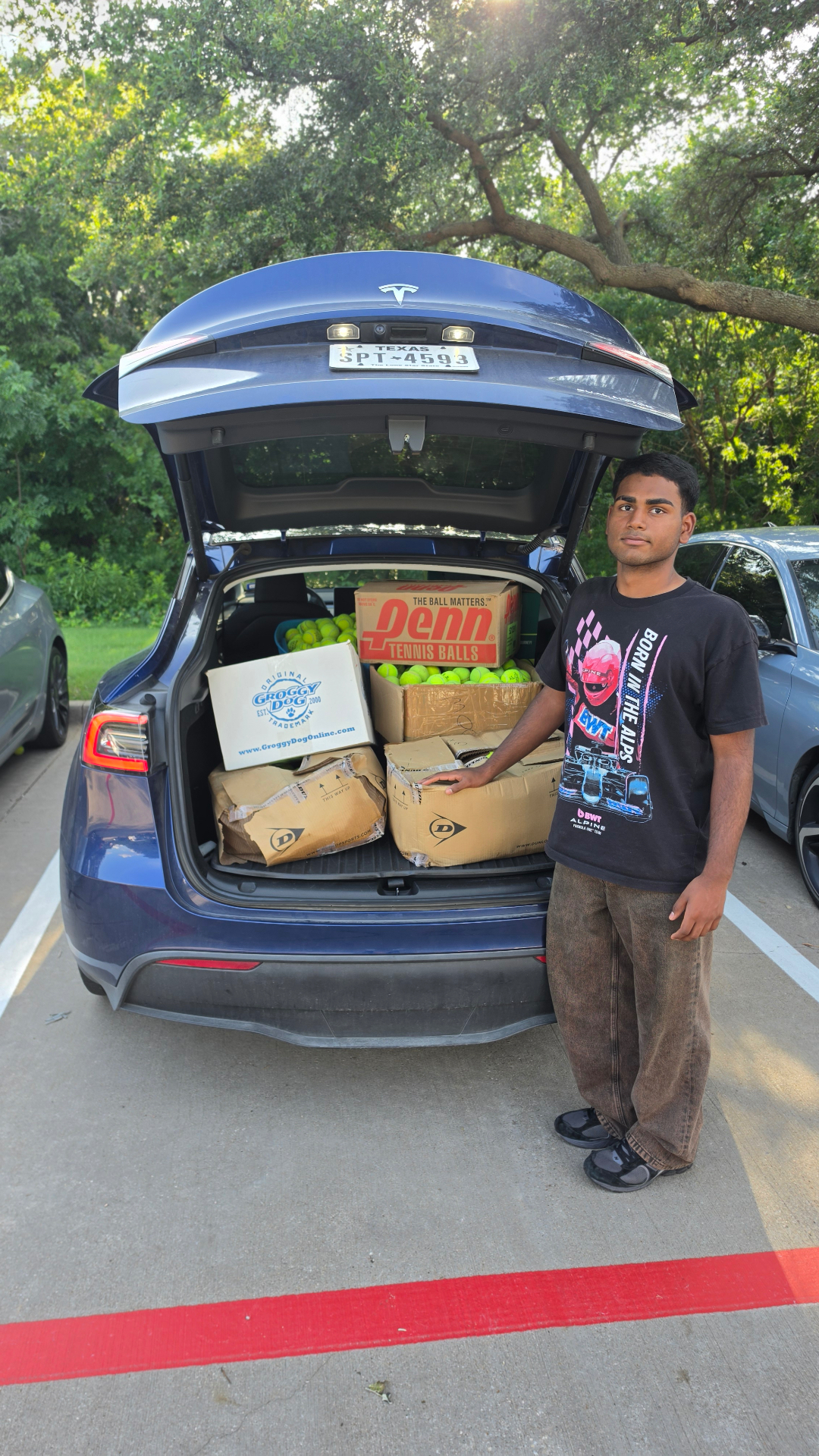
Sydney Shen is a high school tennis player in Chicago who turned a small annoyance, dead balls piling up at public courts, into a growing BallBack chapter. In just a few weeks she has built partnerships across the city and is working to bring collection bins to even more facilities.
Here is how she found BallBack, what she is building in Chicago, and what she has learned about turning a sustainability idea into real action.
11+
Facilities reached out to
2
Partner facilities live
Bi-weekly
Planned pickup rhythm
The player
Doubles, backhands, and a left-handed edge
Sydney plays doubles for her high school varsity team and has been competing for about two and a half years. Her favorite shot is the backhand, a stroke she describes as her secret weapon because it gives her both power and control. Being left-handed does not hurt either.
That competitive focus is part of what made the waste problem impossible to ignore. Every practice and match produces dead balls with no clear disposal path. Once she noticed how many were collecting around the courts, she started looking for a real solution.
Over 125 million tennis balls end up in U.S. landfills every year, and a single ball takes roughly 400 years to break down.
The spark
A search for what to do with dead tennis balls
The turning point came during a regular summer at her local public courts. Sydney kept seeing dead tennis balls pushed into the gaps between fences and courts with no trash cans or recycling option in sight. The image stuck with her: usable rubber sitting around with nowhere to go.
She started searching online for ways to recycle or repurpose used tennis balls. That search led her to BallBack. After reading about the mission, she applied to become a chapter leader and began building out the Chicago program.
"It felt like a full-circle moment. I had been staring at the problem every day without realizing there was a way to actually solve it."
Sydney Shen, Chicago Chapter Leader
The work
Building BallBack across Chicago
In her first two weeks as a chapter leader, Sydney reached out to more than eleven facilities across the Chicagoland area. The list includes dedicated tennis centers and Chicago Park District locations. So far, she has placed collection bins at two partner facilities: XS Tennis and The Sports House.
She is also in conversations with the Chicago Park District administration to expand the program into more public facilities. The goal is a bi-weekly pickup rhythm that keeps bins from overflowing without overwhelming her schedule.
When bins are full, the process is designed to be simple. Chapter leaders request prepaid shipping labels through the BallBack website, pack the balls into boxes, and send them to RecycleBalls in West Virginia. Still-bouncy balls can also be routed to local animal shelters, schools, or youth programs for reuse.
The why
Tennis, leadership, and sustainability
For Sydney, BallBack connects the two things she cares about most: tennis and making a positive impact. The role has pushed her to develop leadership, problem-solving, and communication skills that apply far beyond the court.
She also points to the structure behind the scenes. Weekly mentorship meetings, chapter leader guides, and starter credits for new leaders mean she is not figuring everything out alone. That support has made it easier to approach facilities, pitch the program, and keep momentum going.
- One player noticing a local problem can start a real recycling loop.
- Reaching out to facilities consistently matters more than having a perfect pitch on day one.
- Public courts and park districts are often the most accessible entry points for new chapters.
- The BallBack network, mentorship, and resources help new leaders move faster than they could alone.
Want to lead in your city?
Sydney started with a single question: what do I do with all these dead tennis balls? If you have asked the same thing, you can be the next chapter leader.