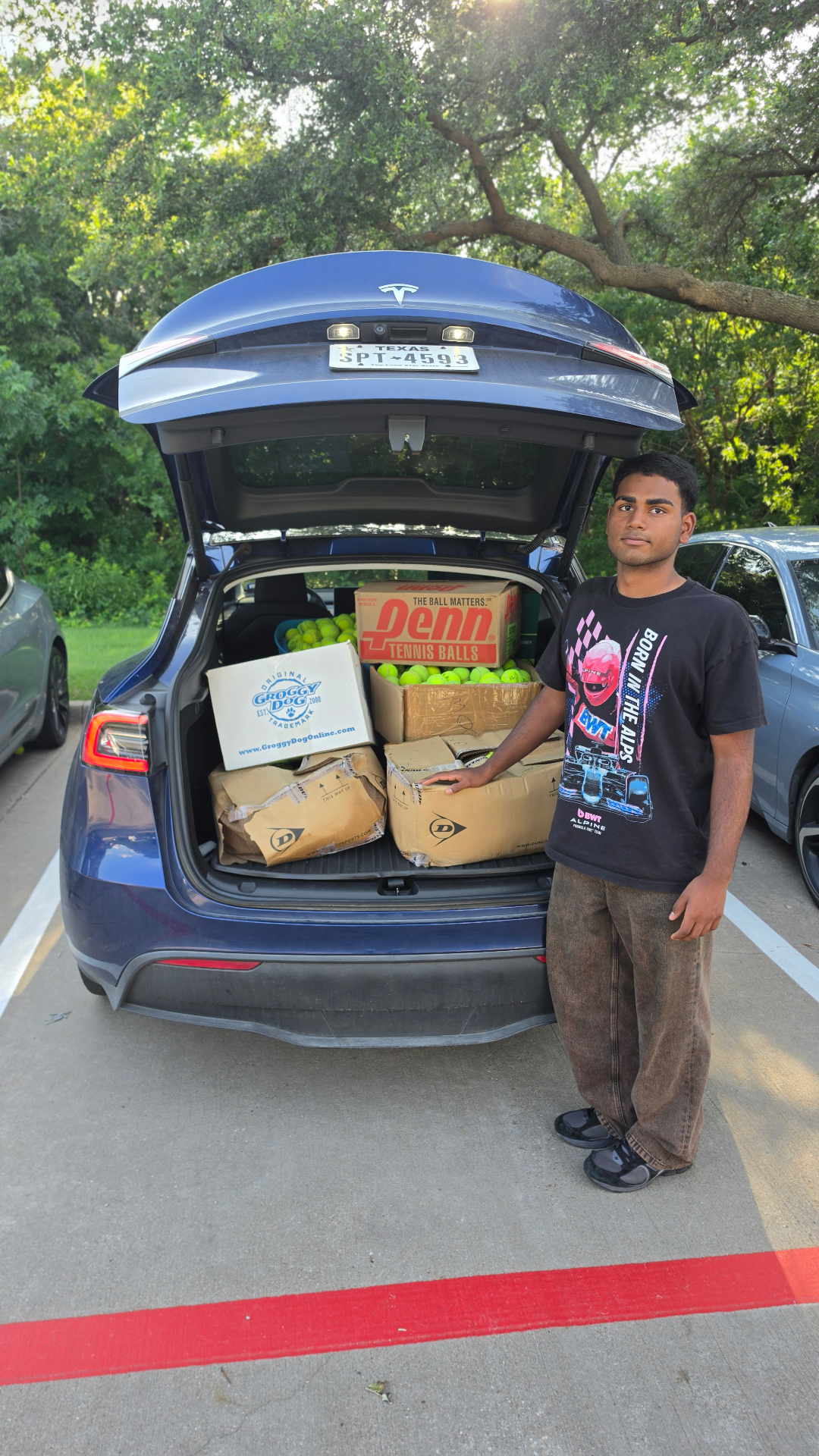
A single tennis ball weighs about two ounces. That is easy to overlook, because nobody throws away just one.
Since 2024, BallBack, a student-run tennis ball recycling nonprofit based in Flower Mound, Texas, has recycled or repurposed more than 160,000 of them. At roughly 58 grams apiece, that is about 9.3 metric tons of rubber and felt, a little over 20,000 pounds.
160,000+
Balls recycled or repurposed
16
States with active chapters
31
Student chapter leaders
Every one of those balls was headed for the trash. According to RecycleBalls, a tennis ball takes roughly 400 years to break down, slowly shedding microplastics into the surrounding soil as it does. Curbside recycling programs do not accept them.
The national picture is larger still. An estimated 125 million tennis balls are discarded in the United States each year, or about 340,000 a day. Measured against that, 160,000 balls amounts to less than half a day of the country's tennis ball waste. What makes BallBack interesting is not only its total so far, but how quickly a model built by high school students is spreading, and how easily it can be copied by anyone with a court, a school, and a car.
The Origin
A question at the dumpster
BallBack began with Prem Kamasani, a varsity tennis player at Flower Mound High School. After practice one evening, he watched his coach getting ready to throw out roughly 400 used balls. He asked whether he could take them instead.
"I noticed hundreds of balls going to the trash every week, and no one was doing anything about it."
, Prem Kamasani, founder
The balls went home with him. Some went to animal shelters as toys, and others ended up under the legs of school chairs. He then began calling local tennis centers to ask whether they had balls to give away as well. Most did. The collection outgrew his family's garage, then several garages, and teammates started collecting alongside him.
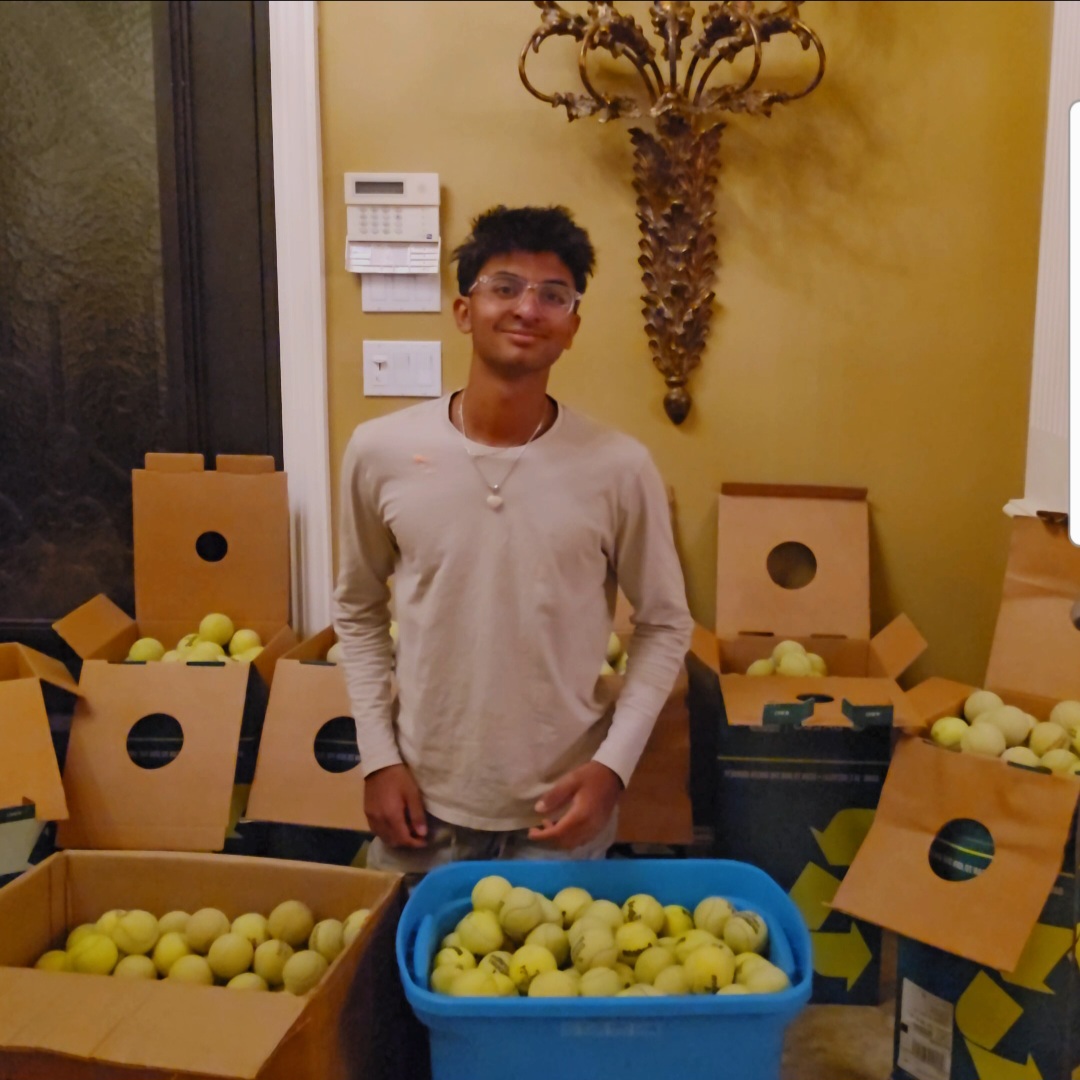
A $10,000 Lead4Change grant helped turn the school project into a national organization, growing to over 310 members in 2026. The funding covered prepaid shipping, so a court anywhere in the country could send in its balls at no cost. Partnerships spread across Dallas–Fort Worth, from public facilities such as Kiest and Samuell Grand tennis centers to SMU's college tennis program and the Flower Mound Animal Shelter.
The Model
Reuse first, recycling second
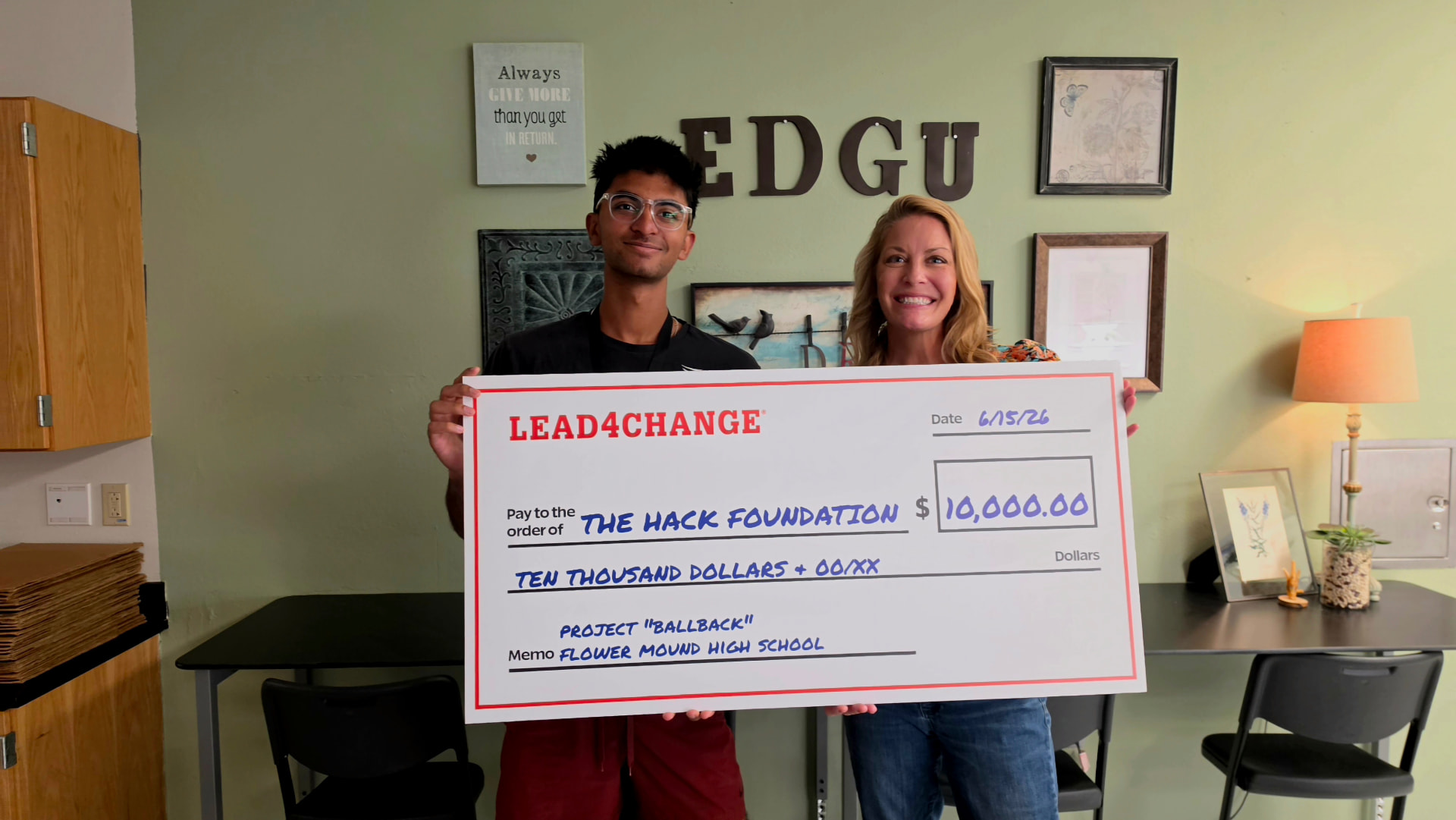
BallBack's process is deliberately simple. A chapter leader places a free, branded collection bin at a partner facility, such as a tennis center, club, school, or homeowners' association. Players drop off dead balls after practice instead of tossing them in the trash. Nobody on site has to sort or clean anything. Leaders keep an eye on fill levels and stop by once or twice a month, before anything overflows.
Sorting comes next, and it reflects the organization's priorities. Balls that still bounce are never shredded. They go back into play through youth tennis programs and school teams that cannot afford new equipment. Others go to dog shelters as enrichment toys, or to senior living communities, where they serve as walker feet.
Only the balls with no play left in them are boxed, labeled with free prepaid shipping, and sent to RecycleBalls, BallBack's national recycling partner, with label support from the USTA. There, the rubber and felt are separated and ground into crumb rubber that becomes new tennis court surfaces, playground padding, and footing for equestrian arenas. Through RecycleBalls and the USTA, BallBack's shipments help feed a North American collection network of roughly 10,000 locations.
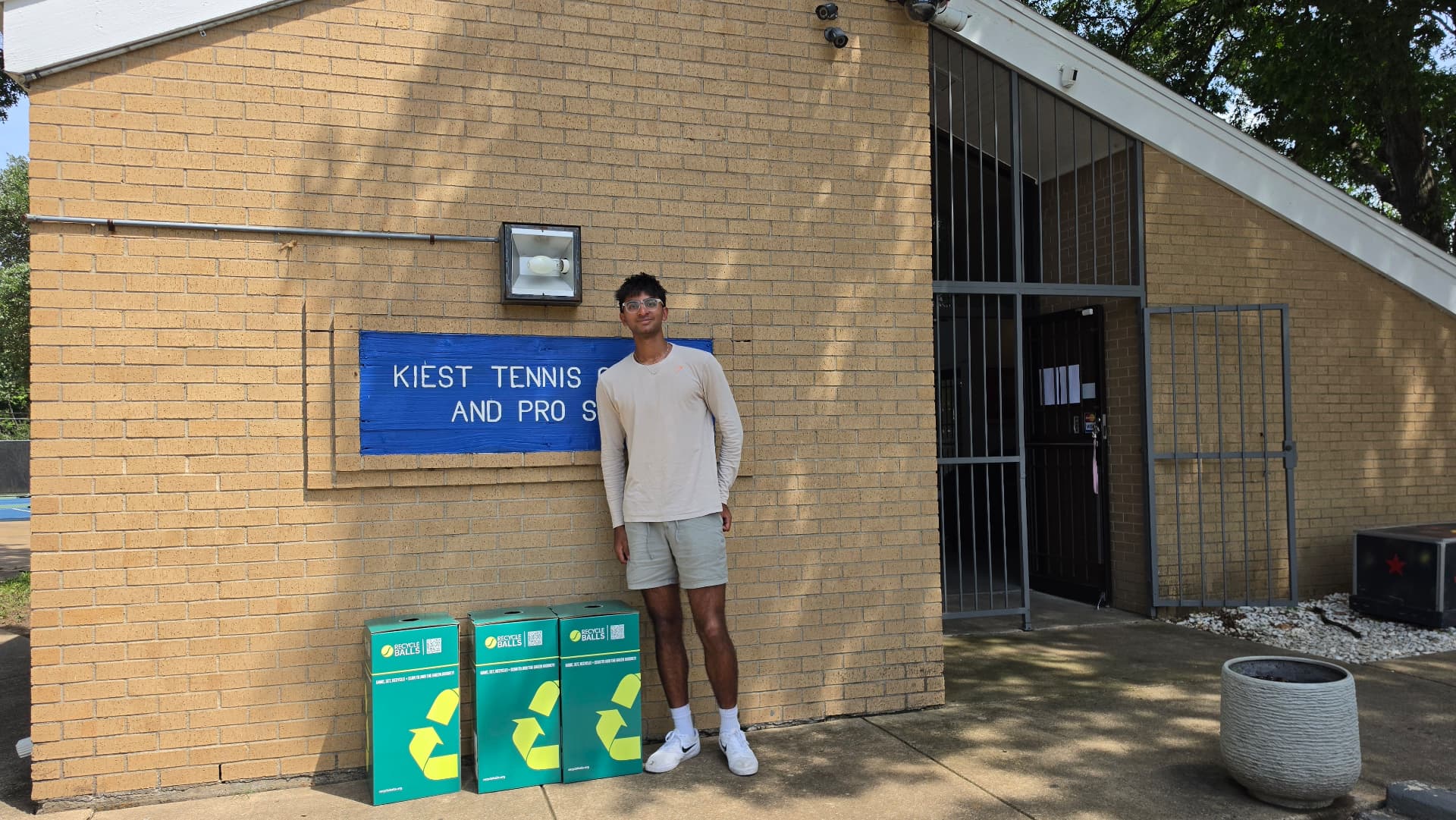
160,000 diverted tennis balls is rubber that will never sit in a landfill. Instead, it becomes court surfaces, playground padding, and gear for youth players.
The Team
Building a system, not a one-person project
BallBack now runs with a national team of students recruited from across the country, each responsible for a distinct part of the work. The media team shapes how BallBack tells its story, from pickup-day footage to chapter spotlights. The marketing team carries that story to new schools, players, and facilities. The onboarding team brings each new chapter leader up to speed with step-by-step guides, so a student in Seattle or Fort Lauderdale can complete a first pickup within a week of signing up. Leaders trade questions and progress in a shared online community.
The structure is what allows the network to grow without depending on any one person. BallBack now counts 31 student chapter leaders across 16 states, more than 310 members, and 47+ partner facilities. Chapters operate in New York City, Philadelphia, Chicago, Portland, Seattle, Minneapolis, Folsom, and Green Bay, among other cities. In Manhattan, one senior ships roughly 750 balls a month. In Falls Church, Virginia, chapter leader Surya Arivumani has already recycled more than 1,200.
Get Involved
Open to any school, any court, any state
BallBack is set up so that taking part does not depend on where you live. Students from middle school through college, in any city without an existing chapter, can apply to start one at their local school. The commitment is one or two pickup trips a month, an hour or two each, for at least four months. Costs are close to zero, and leaders unlock $60 in credit after their first shipment. New chapter leaders are accepted every quarter.
Tennis facilities near an existing chapter can list themselves as operating partners and receive free bins, pickups, and shipping. Facilities elsewhere can join as affiliate partners and ship their own boxes with free prepaid labels. Individuals with a bag of old balls in the garage can also request a free shipping label, pack a box, and drop it off. In Dallas–Fort Worth, anyone with 100 or more balls can arrange a free pickup.
Looking Ahead
A world record attempt in Spring 2027
BallBack's next milestone is a world record for the most tennis balls recycled in a single week. The plan is a coordinated national recycling week in Spring 2027: chapter leaders, members, and partner facilities across the country collecting, sorting, and shipping tennis balls at the same time. The attempt is still being organized, and BallBack has yet to decide on an adjudicator, whose rules would determine how the balls are counted and verified.
Whatever the final tally, the week is designed to do something no single chapter can: show what happens when hundreds of courts in dozens of cities make the same choice to recycle at once.
Spring 2027: a coordinated national recycling week, aimed at the world record for the most tennis balls recycled in a single week.
Full Circle
Coming full circle
Long before BallBack, Kamasani's father would send him to gather old balls from behind their neighborhood courts rather than buy new ones. Today, Kamasani mentors student leaders he has never met, in cities he has never visited, who are doing the same thing on a national scale.
"160,000 is proof that a bin by the fence and a student with a car can move a real number."
, Prem Kamasani, founder
- 160,000+ tennis balls recycled or repurposed since 2024.
- 31 student chapter leaders across 16 states, 310+ members.
- 47+ partner facilities, with free bins, pickups, and shipping.
- Reuse first: playable balls go to youth programs, shelters, and senior communities.
- Next up: a world record attempt in Spring 2027.
Give your courts a second serve
Start a chapter at your school, get a free shipping label for the balls piling up at your court, or partner your facility with us.