You crack open a fresh can, play a few sets, and by the end of the week those balls are dead. Flat, fuzzy, useless. So you toss them. Everyone does. It's just part of the game.
But have you ever actually stopped to think about where they go?
They go into the ground. For centuries.
A single tennis ball takes an estimated 400 years to decompose, slowly releasing methane gas as the rubber degrades underground.
Tennis balls are made from two materials: a pressurized rubber core and a felt exterior woven from nylon and wool. Both are durable by design, which is great for your backhand and terrible for the environment. Once a tennis ball ends up in a landfill, it doesn't break down in a year, a decade, or even a lifetime. A single tennis ball takes an estimated 400 years to decompose, slowly releasing methane gas as the rubber degrades.
Now multiply that by the number of balls in play across the country.
The lifecycle of a typical tennis ball
New can opened
3 pressurized balls per can
1-2 weeks of play
Pressure drops, bounce fades
Tossed in the trash
No curbside recycling option
Sits in landfill
400+ years to decompose

The Scale
The Scale of the Problem
Every year, approximately 125 million tennis balls are discarded into U.S. landfills. That's roughly 20,000 metric tons of near non-decomposable rubber waste sitting underground, producing greenhouse gases, and going absolutely nowhere for generations. And that number doesn't account for the rest of the world. Global production of tennis balls sits around 300 to 330 million per year, with recycling rates under 1%.
The wild part? Tennis players know this. Most of them just don't have a realistic way to do anything about it.
125M
Balls trashed in the U.S. yearly
20K
Metric tons of rubber waste
<1%
Global recycling rate
How tennis ball waste compares
U.S. average recycling rate
One of the highest rates
Almost none have a recycling path
The Challenge
Why Tennis Balls Are So Hard to Recycle
The challenge isn't awareness. It's infrastructure. Tennis balls can't go into your curbside recycling bin. The rubber-felt composite requires specialized processing to separate and reuse the materials. Most municipal recycling programs aren't equipped for it, and until recently there was no national-scale solution for collection.
The technology to recycle tennis balls exists. What's been missing is collection infrastructure: getting used balls out of trash cans and into the right hands.
That's the gap BallBack was built to fill.
"We recycle paper, plastic, cans. But tennis balls? No infrastructure existed. Nobody had built it."
Prem Kamasani, Founder of BallBack
The Solution
What Actually Happens When Balls Are Recycled
When tennis balls are properly recycled through programs like BallBack and our national partner RecycleBalls, a few things can happen:
Material separation
The felt is separated from the rubber through a grinding process.
Rubber becomes 'Green Gold'
Crumb rubber used in courts, horse footing, and construction.
Balls get a second life
Still-bouncy balls donated to shelters, schools, and PE programs.
A ball that would have sat in a landfill for 400 years can instead become part of a tennis court, a horse arena, or a shelter dog's favorite toy.
Our Partners
Who Makes This Possible
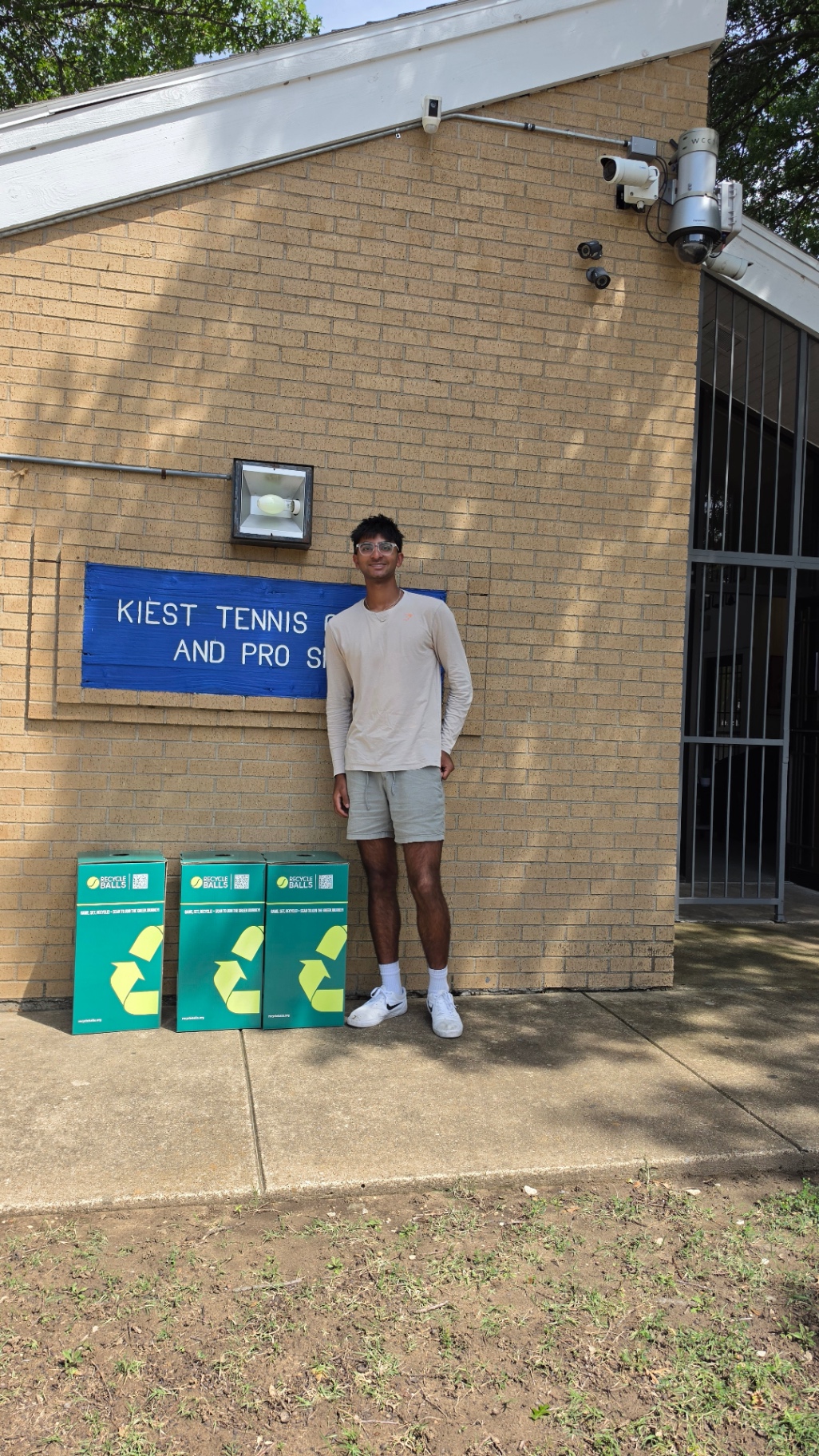
BallBack works with a growing network of facilities and organizations to make collection seamless. Our national recycling partner RecycleBalls.org handles the certified processing and logistics, while local facilities across DFW host our bins:
Take Action
What You Can Do Right Now
If you play tennis in the DFW area, BallBack makes recycling your old balls completely free and effortless. We work with local schools, HOAs, and tennis centers to place collection bins at courts. You drop your dead balls in, and we handle everything else from pickup to shipping.
If you're a tennis facility or coach with dead balls piling up in storage, reach out to us. We'll coordinate a pickup and make sure those balls don't end up where they've been going for decades.
And if you want to bring this system to your city, we're looking for student chapter leaders to expand BallBack nationwide.
The balls are going somewhere either way. Make sure they get a second life.

