
If you play tennis, you know the drill. You crack open a new can, hear the pop, bounce a ball a few times. Feels great. But then a week later, those same balls are dead. Flat. Sitting in a bucket somewhere, waiting to get tossed in the trash. That is kind of where this whole thing started for me.
The Problem
Nobody Thinks About Where Tennis Balls Go
Here's a number that kind of blew my mind when I first looked it up: roughly 325 million tennis balls get manufactured every single year. Think about that. Matches, lessons, ball machines, practice sessions at every level from rec leagues to D1 programs. All those balls eventually lose their bounce.
Every tennis ball ever thrown away in your lifetime is still out there somewhere. Vulcanized rubber wrapped in synthetic felt takes over 400 years to break down in a landfill.
Environmental Protection Agency estimates
And then? They end up in the garbage. The thing is, tennis balls are made from vulcanized rubber wrapped in synthetic felt. That combo takes over 400 years to break down in a landfill. So basically, every tennis ball that's ever been thrown away in your lifetime is still out there somewhere, sitting in a pile.

325M
Balls produced per year
400+
Years to decompose
0
Recycling options at most courts
What makes a tennis ball so hard to break down?
Non-biodegradable synthetic rubber
Synthetic blend resistant to decomposition
Sealed air that gradually escapes
How It Started
It Started with a Bucket of Dead Balls
I'm Prem, a varsity tennis player at Flower Mound High School out in the Dallas-Fort Worth area. Like most players, I spent years not thinking twice about what happened to old tennis balls. But once you start noticing, you can't stop. Dead balls were everywhere. In the corners of courts, overflowing from trash cans, sitting in bags that coaches didn't know what to do with.
So I started asking around. Coaches at my school, at the local clubs, at other facilities in the area. The answer was always the same: "We just throw them away. There's nowhere to send them." That really bugged me. We recycle paper, plastic, cans. But tennis balls? No infrastructure existed. Nobody had built it.
"I kept asking coaches what they did with old balls. Every single one said the same thing: we throw them out. That's when I knew somebody had to figure this out."
Prem Kamasani, Founder of BallBack
Building It
Collection Bins, Partnerships, and Figuring It Out
The idea behind BallBack is pretty simple. Put collection bins at tennis facilities. Collect the balls. Then either recycle them through certified partners or donate the ones that still have some life left to kids who need them. Instead of those balls rotting in a landfill for the next four centuries, give them a second life.
BallBack's model is built on three pillars: collect at local facilities, recycle through certified partners, and donate still-usable balls to youth programs.
We started small. A couple bins at courts around Flower Mound. But it caught on fast. Coaches loved having a designated spot for dead balls. Players liked the idea of tossing them in a green bin instead of the trash. Within a few weeks, we were pulling in hundreds of balls.

Our Journey
Key Milestones
First bins placed
Flower Mound High School courts
1,000 balls collected
Within the first month
RecycleBalls partnership
National recycling logistics
40+ partnered facilities
Growing across DFW and beyond
65,000+ balls recycled
And counting
Our Partners
The Facilities and Organizations Behind the Mission
None of this works without the people who actually open their doors to us. We've been incredibly lucky to partner with some amazing facilities and organizations across the DFW area and beyond.
On the national side, we partnered with RecycleBalls.org, which handles the certified recycling logistics, prepaid shipping labels, and bin infrastructure. They've been essential to making this work at scale. We also connected with Together Tennis, founded by our own team member Harry Honig, which focuses on getting tennis equipment to underprivileged youth. Through that partnership, we've donated hundreds of still-usable balls to kids who might not otherwise have access to the sport.
Locally, facilities like Bridlewood, Fretz Tennis Center, Trophy Club, LB Houston, and Oak Creek have all welcomed our bins and helped spread the word. The buy-in from these places has been huge. They get zero-cost, zero-effort recycling, and their members feel good knowing the balls aren't just going to waste.
The Numbers
Where We Are Today
65,000+
Balls recycled or repurposed
3,200+
Balls donated to youth
40+
Partner facilities
16
Chapter Leaders
10x
Growth in Year 1
DFW+
Expanding Nationwide
What started as a couple of bins at my high school has turned into a real operation. We've recycled or repurposed over 65,000 tennis balls, donated more than 3,200 to youth programs, and built a network of 40+ partner facilities. We've got interns, 16 chapter leaders at other schools, and a growing community of people who care about this stuff.
Honestly, the growth has been kind of surreal. I started this because I was annoyed by a problem. Now it's a team, a network, and something that actually makes a measurable difference.
Why It Matters
It's Not Just About Tennis Balls
Yeah, we recycle tennis balls. But that's really just the surface. BallBack is about proving that you don't need a huge budget or a fancy title to fix something that's broken. You just need to care enough to start. We're a bunch of high school students who saw a problem, built a solution, and kept pushing until it worked.
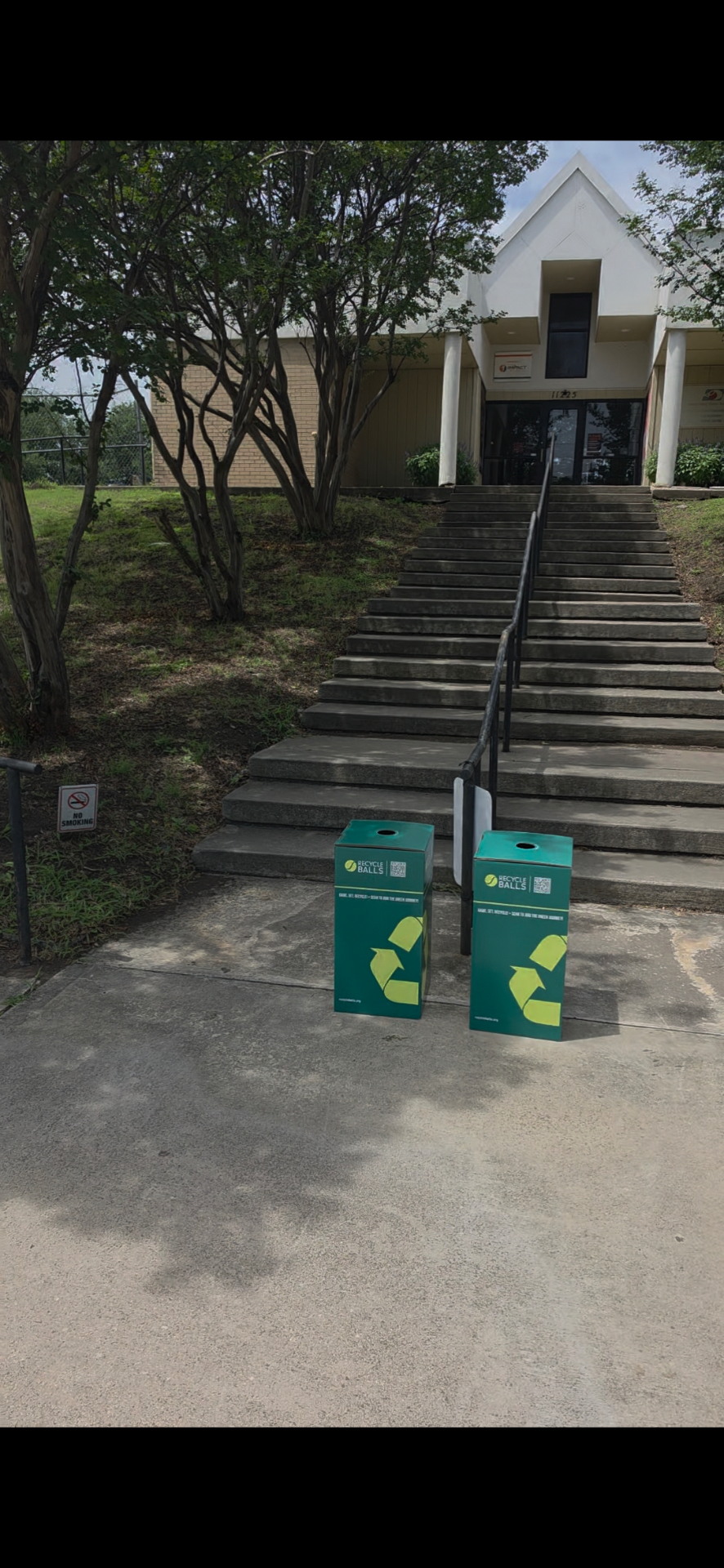
Every ball we collect is one that won't sit in a landfill for the next 400 years. Every ball we donate is a chance for some kid to pick up a racket for the first time.
Join Us
Want to Be Part of This?
Whether you're a player, a coach, a parent, or just somebody who thinks this is worth doing, there are real ways to get involved.
Because every ball deserves a second serve.


